
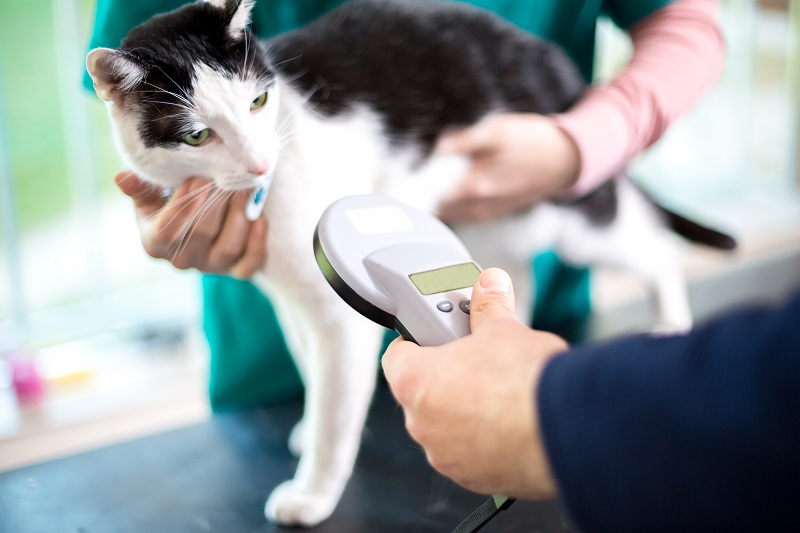
Microchipping
At Auburn Valley Animal Clinic, we are happy to offer microchipping. Every year, thousands and thousands of pets go missing. Not knowing where your pet is or how to bring them back can be a helpless, hopeless feeling. It’s a tragedy that happens all too often.
But there is a simple, safe, and effective way to ensure your pet’s safety and retrieval should he or she ever become lost. Microchipping is a standard procedure that implants a tiny chip underneath your pet’s fur. It is a painless and relatively fast procedure and is completely safe.
Microchipping FAQs
Should I microchip my dog or cat?
Yes. Microchipping is one of the safest and most effective ways to help a lost pet find their way home. A microchip provides your pet with a permanent form of identification that cannot fall off, be removed, or become unreadable like a collar or tag.
While collars and ID tags are still important, a microchip offers an extra layer of protection if your pet ever becomes lost.
Does a microchip have GPS or let me track my pet?
No. A microchip is not a GPS tracking device. It does not have a battery and cannot track your pet’s location.
Instead, each microchip contains a unique identification number. When a lost pet is brought to a veterinary clinic, animal shelter, or rescue organization, they can scan the chip and access the registered owner’s contact information through the microchip registry.
Does microchipping hurt my pet?
Microchipping is quick, safe, and causes very little discomfort. The microchip is about the size of a grain of rice and is placed just under the skin between the shoulder blades using a sterile needle.
Most pets react similarly to receiving a routine vaccine. The procedure takes only a few seconds and does not require anesthesia.
Does my pet still need a collar and ID tag if they have a microchip?
Absolutely. The best protection is to use both. A visible ID tag allows someone who finds your pet to contact you immediately without visiting a veterinary clinic or shelter.
If the collar comes off or the tag becomes unreadable, the microchip serves as a permanent backup form of identification.
What happens after my pet is microchipped?
The most important step is registering the microchip and keeping your contact information up to date. A microchip is only useful if the registration information is accurate.
If you move, change your phone number, or transfer ownership of your pet, be sure to update the microchip registry.
At Auburn Valley Animal Clinic, we’re happy to answer questions about registration or scan your pet’s microchip during routine visits to ensure it’s functioning properly.
A microchip is a simple, affordable investment that can make all the difference if your pet is ever lost. Combined with a collar, ID tag, and current contact information, it greatly increases the chances of a happy reunion.